Sushant Lok, Gurugram · In-person & online
You've noticed something. That's not a small thing.
Big feelings, tricky behaviour, silent rooms at home, storms at school — children speak through all of it. I'm Mehak Arora, a clinical psychologist for children, teenagers and the families who love them. Together we translate what your child is saying — and give everyone better words.
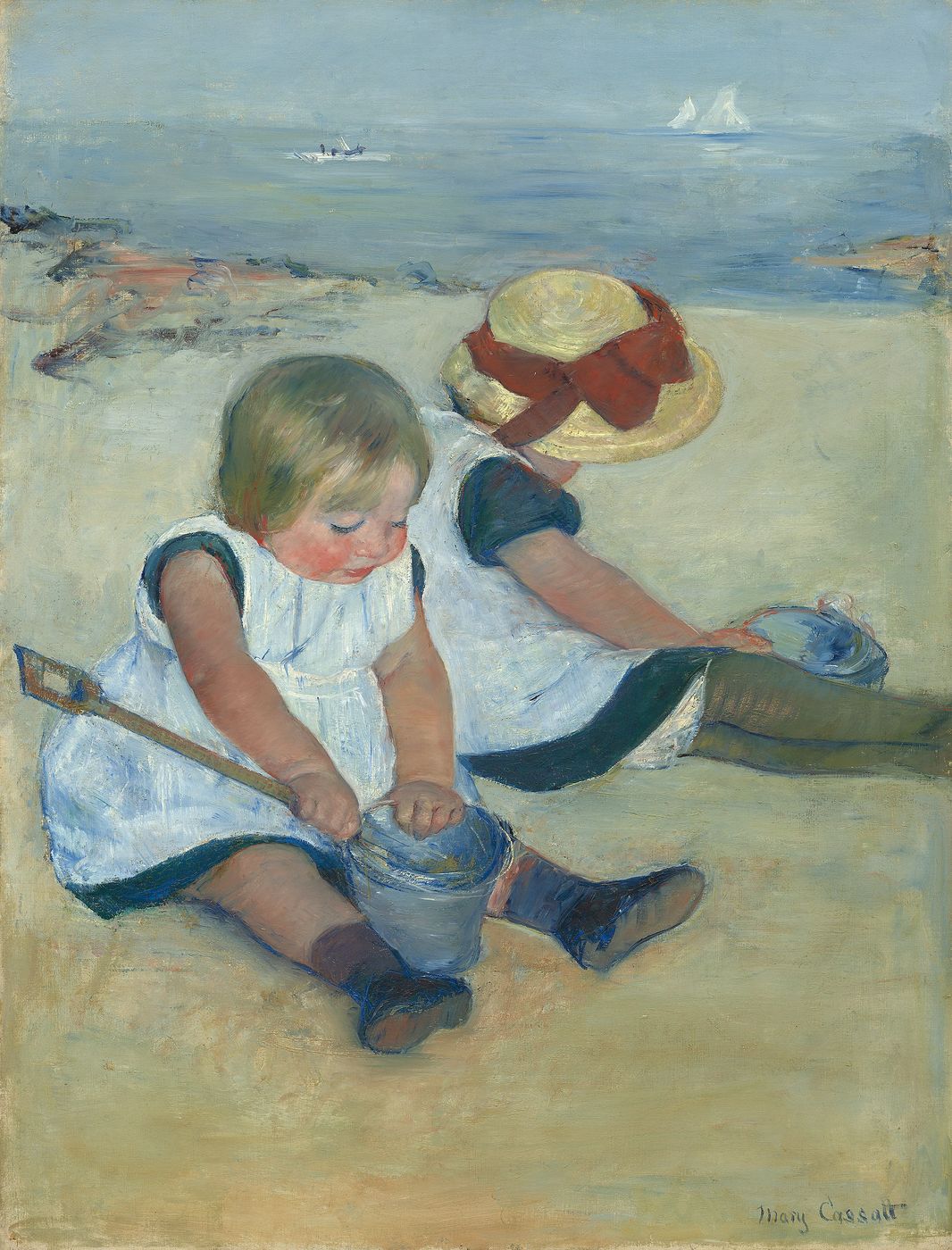
their hour should feel like this — light, safe, theirs Mary Cassatt, Children Playing on the Beach · public domain · Commons ↗
Different ages, different languages
Little ones ages 3–6
Tantrums, sleep, separation, big reactions to small things. We work through play — their native tongue.
See how 02School years ages 7–12
Friendship trouble, school stress, screens, emotions bigger than their words. Drawing, talking, practising.
See how 03Teenagers ages 13–17
Doors that stay shut, anger that has no address, anxiety before exams. Respect first, tools second.
See how
This part is for you, parent
If you're reading this at 1 a.m., after another evening that went sideways: noticing is parenting. You are not overreacting, and you are not alone. Seeking help early isn't an admission that something is wrong with your child — it's making sure their feelings get words before they become patterns.
- ✓ You'll never be told your child is "just being a kid" — or be handed a label without care.
- ✓ Sessions end with something concrete: a phrase to try, a routine to test, a next step.
- ✓ Confidentiality is explained to your child in their language — trust is the therapy.
the sooner a feeling gets words, the smaller it has to grow
Start with one honest conversation.
Bring your list — the one in your head. We'll go through it together, unhurried.
About
Hi, I'm Mehak. I speak fluent kid.
A clinical psychologist and psychotherapist practising in Sushant Lok, Gurugram — with over a decade of sitting at small tables, on small chairs, helping small people with very large feelings. (And helping their not-so-small people too.)
M·A
portrait to be added
on request & with consent
Why children & families?
Because childhood is where the patterns start — and where they're softest. What a six-year-old acts out at the dinner table, a sixteen-year-old has to live with. Early support is not about fixing children; children aren't broken. It's about giving feelings a healthier route out, while the routes are still being built.
My training is clinical — assessment, diagnosis and evidence-based therapy — but my work is play, warmth and trust. A child who feels judged goes quiet. A child who feels safe tells you everything. My first job in every session is to be someone your child wants to come back to.
The road here
- M.Phil Clinical Psychology — the clinical licence that qualifies me to assess and treat, not just counsel ↗
- Early clinical years at Vimhans Hospital — where I learned that diagnosis without empathy is just paperwork ↗
- Ten-plus years in private practice — hundreds of families, one lesson repeated: parents are the therapy that goes home ↗
"behaviour is a sentence your child doesn't have words for yet."
Approach
What actually happens in that room?
No couch, no clipboard-silence, no "and how does that make you feel" on loop. Here's the honest shape of the work — so no child (and no parent) walks in blind.
-
1
Hello · the first meeting
The first session is 60% warm-up. For little ones, that's play. For teens, that's me promising — and proving — that this room doesn't report to their parents. You (the parent) get your own space too: I'll hear the full story, without rushing to conclusions.
-
2
Map · understanding, not labelling
Over a few sessions we map what's actually going on — at home, at school, inside. Where clinical assessment is needed, it's done properly. Where it isn't, we don't pretend it is. You'll always know what I'm seeing and why.
-
3
Plan · therapy, but visible
We agree on goals in plain language: "sleep in her own bed by month two", "one full school week without stomach-aches". Behaviour therapy, emotional regulation skills, family sessions where the system — not the child — is the thing that changes.
-
4
Climb · and let go
Good therapy ends. Sessions space out, tools move into your hands, and the goal is that your family doesn't need me. Relapse is normal, not failure — the door stays open.
Tools I actually use (and explain to your child)
Behaviour therapy
What rewards, what accidentally feeds the storm, what to change first. Charts your child can own.
Emotional regulation
Feelings get names, bodies get calming strategies, meltdowns get shorter. Skills, not lectures.
Play & drawing
For ages that don't do sit-and-talk. The play is the conversation.
Family counselling
Sometimes the fastest way to help a child is to change the weather around them.
— and yes, I'll teach you the exact phrases to use at bedtime
Services
Same care, three dialects.
Pick your child's age band — the worries, the methods and the shape of sessions change with them.
Little ones, big weather
You might be seeing
- Volcano tantrums that end in everyone crying
- Bedtime that takes three hours and two parents
- Clinginess at school drop-off that breaks your heart
- Hitting, biting, or rules that mean nothing
- Regression — baby talk, wet nights, "can't" do things they could
What we do about it
At this age, children don't talk their feelings out — they play them out. Sessions look like games, drawing and stories; underneath, they're structured assessment and behaviour work. You get a front-row seat and a script: the same phrases and routines we use in the room, so the calm follows your child home.
- Play-based assessment & therapy
- Sleep & routine engineering
- Separation & school-readiness work
- Parent coaching alongside
The middle years, when the world gets loud
You might be seeing
- School refusal — the morning negotiation, every morning
- Stomach-aches with no medical cause, before tests or Mondays
- Friendship drama that turns Tuesday into a crisis
- Screen time standoffs that end in slammed doors
- Tears or anger that seem too big for the trigger
What we do about it
This is the golden age for skills: they can name feelings, learn calming strategies, practise them — and be proud of it. Sessions mix talking, drawing and doing. Where school is part of the loop, I help you and the school pull in the same direction instead of opposite ones.
- Emotional regulation skills, taught like any other skill
- Anxiety & school-stress protocols
- Behaviour plans you didn't need a fight to start
- Teacher coordination letters where useful
Teens — respect first, tools second
You might be seeing
- The bedroom door that stays shut (and what that silence costs)
- Anger that has no address, or sadness that has no words
- Exam anxiety that eats sleep, appetite and confidence
- Screens as an escape, fights as the only conversation left
- A kid you used to know, behind a person you can't reach
What we do about it
Therapy with teenagers works exactly as long as they trust it. So the rules are theirs: what's shared with parents, what stays in the room, and what we work on. I keep you close without making your teen feel surveilled. Then — CBT-style tools for anxiety and low mood, real conversation about pressure, identity, friendships and the future.
- Confidentiality explained to them, honoured with you
- Anxiety, low-mood & exam-pressure work
- Anger & communication re-skilling
- Parent sessions on staying connected without pushing
Families & grown-ups
You might be feeling
- Like you're parenting on different teams
- Guilt that you caused this, fear that you're missing something
- Your own anxiety spiking every time the door slams
- Loneliness in a house full of people
What we do about it
A child is a weather system; the family is the climate. Family sessions change the climate: same-message parenting, calmer mornings, rules that survive the hard evenings. And yes — adults come here too. Family counselling and individual work for parents is part of this practice, and often the fastest way to help a child is to help the people carrying them.
- Family counselling sessions
- Parent coaching & co-parenting alignment
- Individual therapy for adults
- Emotional outbursts & loneliness work ↗
Session fee: ₹ [[—]] (to be confirmed when you book — I'd rather tell you the real number than a rounded one) confirm
The Feelings Guide
Behaviour → meaning → next step
A gentle translator, not a diagnosis. Tap everything you're seeing at home right now — the more honest, the better — and I'll show you what it usually means in my consulting room, and what actually helps.
What are you seeing?
Select all that apply — no judgement here.
everything you tap stays on this page — nothing is sent anywhere
One honest caveat: this guide is a map, not a diagnosis. Ten children can show the same behaviour for ten different reasons — that's exactly what a proper assessment untangles. If what you read above felt familiar, that's a good sign it's worth a conversation.
FAQ
What parents actually ask me
What happens in the first session?
Mostly, we get comfortable. With young children that's play; with teens it's ground rules (what's private, what's shared). Parents usually give background in the same visit. You leave with a sense of the plan — not just a bill and a "see you next week".
Will my child think something is "wrong" with them?
This is the fear I hear most, and it's the right one to have. The frame I use: "This is a person whose job is feelings — like a coach, but for the inside." Children absorb your tone long before they absorb the word "psychologist". If you're calm and matter-of-fact, they will be too.
How many sessions will this take?
Honest answer: it depends on the map, and I won't sell you a fixed number before I've drawn it. Simple behaviour work often shows movement in 6–8 sessions; deeper emotional work takes longer. We review progress openly — therapy you can't question is therapy you shouldn't trust.
Session length and review cadence to be confirmed — typical formats are 45–60 minutes.
Do you see families online?
Yes — I consult in-person in Sushant Lok and online. Play-based work with under-7s is usually better in person; talking therapies with teens move online without losing much.
What do you tell my teen's school — or my in-laws?
Nothing, without your explicit say-so. Confidentiality isn't a courtesy here, it's clinical infrastructure — it's what makes teenagers tell the truth. The exceptions are the legal and ethical ones around safety, which I explain to every family in the first session.
What if it's urgent?
If a child or anyone is at immediate risk, don't wait for an appointment — Tele-MANAS (Govt of India) is 24×7 at 14416 or 1-800-891-4416, and Kiran helpline is 1800-599-0019. For everything else, tell me the situation when you book and I'll be straight with you about how fast I can see you.
Visit
Let's get your child a good month.
Book below — your answers arrive as a tidy WhatsApp message to my desk, and I reply personally.
If it can't wait: Tele-MANAS 24×7 14416 · Kiran 1800-599-0019 · iCall 9152987821 — free, confidential, in your language.